Getting my life back from salon admin by planning each week
Getting my life back from salon admin starts with a weekly plan. Learn to fit paperwork, messages and bookings around busy days and quieter periods in your s...
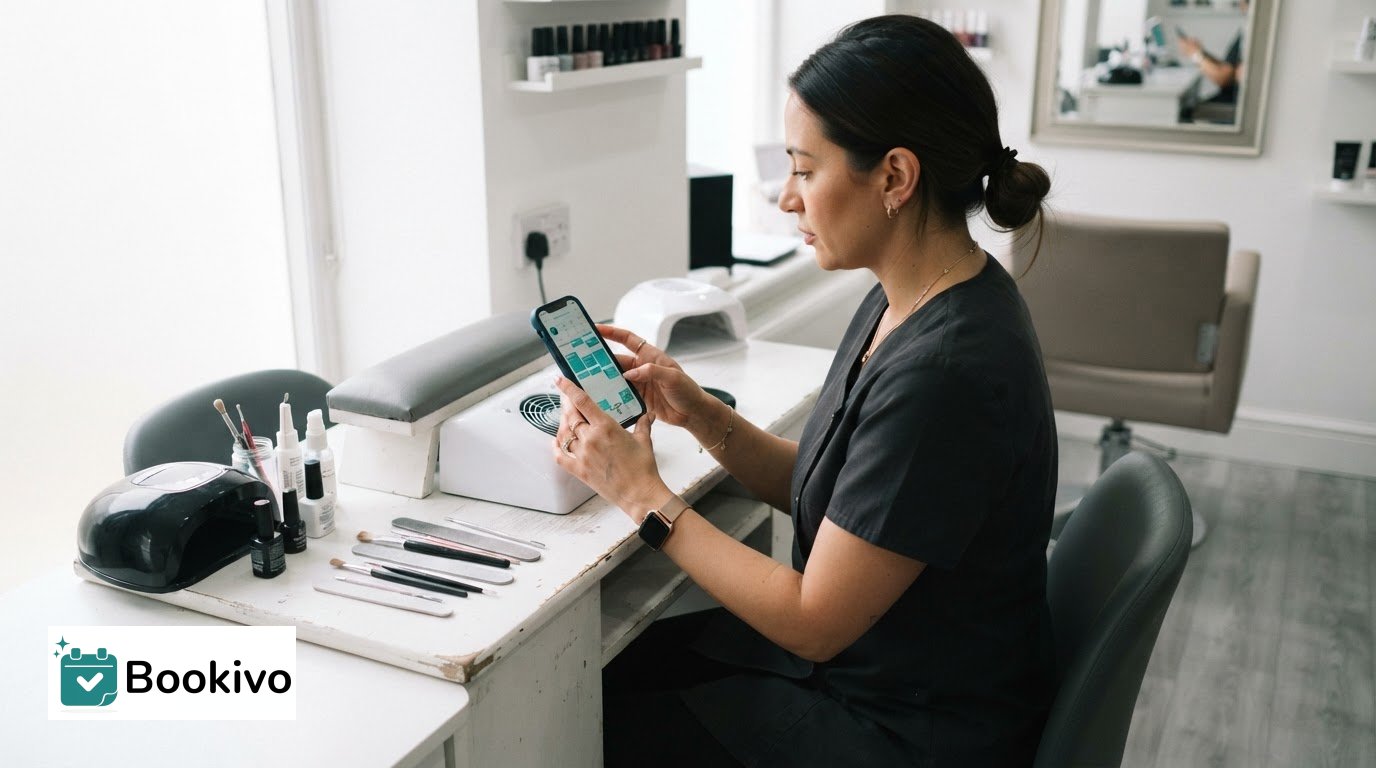
Getting my life back from salon admin starts with giving it a place in the week, rather than letting it spill into every evening. Set aside time at home after closing only when needed, and use quieter salon days for tasks that fit between appointments.
Messages, bookings and paperwork can quickly build up when your attention is on clients. A weekly plan won’t make busy days disappear, but it gives unfinished tasks a clear time and place, so they’re less likely to follow you home.
This article explains how to set aside focused time for salon admin, plan around busy and quiet days, and make a home catch-up session manageable. It also looks at how online booking and business management software can reduce the manual organising on your list.
Key Takeaways
- Give at-home admin a defined place in your week so unfinished tasks don’t keep taking over your evenings.
- Match admin tasks to your salon’s busy and quieter days, keeping focused work for times when you can give it proper attention.
- Identify which recurring tasks take up the most time, then look for ways to make the process simpler and more consistent.
- Explore online booking and digital forms to reduce some of the manual organising behind appointments and client records.
Catching up with admin at home when the salon is closed
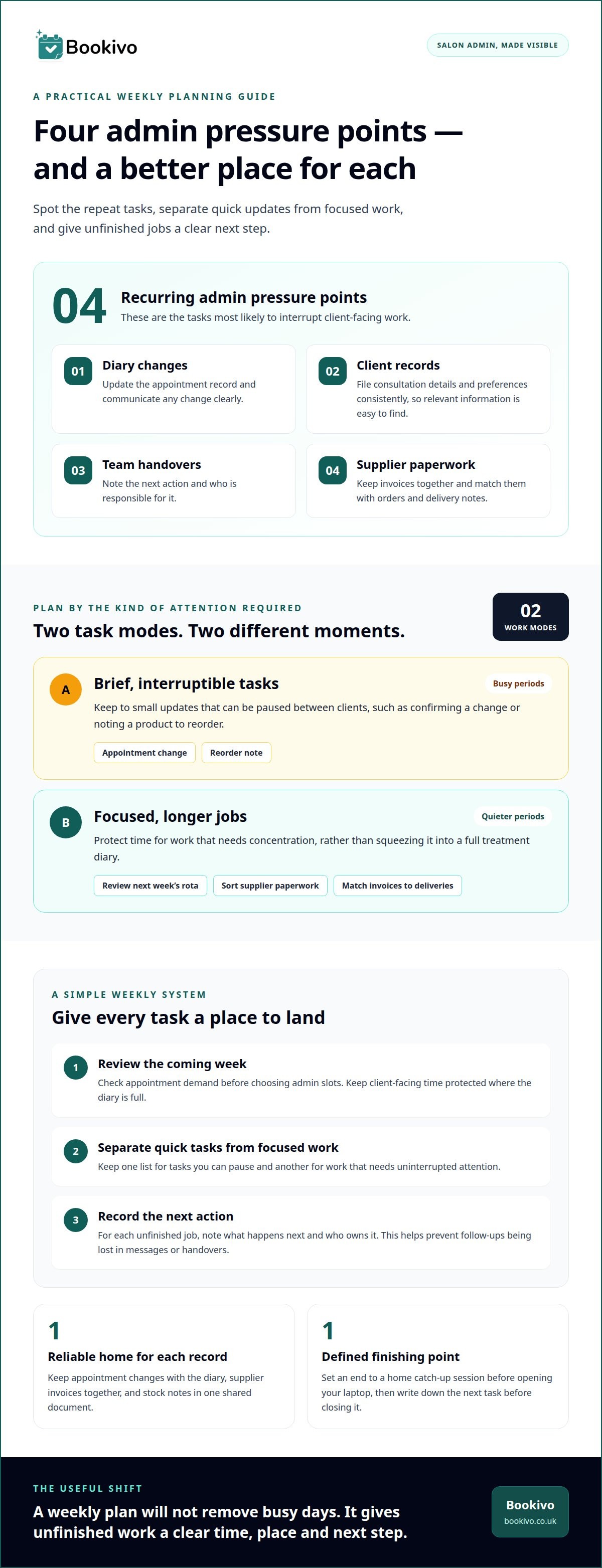
If you have a regular closed day, set aside time for tasks that need concentration. For example, use a day at home to catch up, alongside quieter periods in the salon. Start with a written list of unfinished work, such as supplier invoices, stock orders and appointment changes. Separate urgent client matters from tasks that can wait until your next planned session.
Choose a clear finishing point before opening your laptop. Work through one category at a time, such as matching invoices to deliveries before reviewing stock. Keep related records together, then note each follow-up and its next action. This keeps a home catch-up focused instead of turning it into an unplanned working day.
Whether to hire help depends on what is causing the backlog. A receptionist can handle front-desk enquiries, a virtual assistant can take on agreed remote tasks, and a freelance bookkeeper can organise financial records. Define responsibilities and access before handing work over.
For rotas and holiday records, keep clear information about staff working patterns and time off. According to the Financial Conduct Authority, full-time employees have 28 days of statutory holiday, including bank holidays.
Client records and marketing messages can contain personal data. Limit access to people who need it, keep communication preferences clear, and refer to Information Commissioner’s Office guidance when considering UK GDPR and marketing responsibilities.
For stock and invoices, match deliveries to orders and keep supplier paperwork together. Maintain VAT records separately from appointment notes, and use a qualified bookkeeper or accountant for reporting support. Outsourcing or booking software can reduce manual work, but unclear responsibilities, inaccurate records and poor access controls create risks. To protect evenings and weekends, reserve a regular admin slot, switch off work notifications outside it, and write down your next task before closing your laptop.
Planning salon administration around busy and quiet days
A weekly plan matches admin to appointment demand and the gaps in your diary. It protects client-facing time and gives essential tasks a defined place.
Scheduling admin around demand
Schedule admin around demand by assigning different tasks to busy and quiet periods. A full treatment diary leaves little room for focused work, while a quieter day can make space for tasks that need concentration.
Review the coming week’s appointments before setting your admin slots. On a packed Saturday, keep work to brief tasks between clients, such as confirming a change or noting a product to reorder. Use a quieter Tuesday for longer jobs, such as reviewing next week’s rota or sorting supplier paperwork.
Keep one short list of tasks you can pause and another for work that needs uninterrupted attention. This distinction helps prevent a quick diary update from turning into an unfinished pile of invoices.
Reducing paperwork and reclaiming time
Reducing paperwork means cutting repeated recording and keeping essential information organised. Searching through notebooks, messages and loose forms can interrupt appointments as well as planned admin.
Choose one reliable place for each type of record. Keep appointment changes with the diary, supplier invoices together, and stock notes in one shared document. At the end of a quiet shift, file new paperwork and add outstanding actions to your next admin slot.
Review recurring forms and messages for details you record more than once. A consistent template for appointment follow-ups can make replies quicker, while clear file names make invoices easier to retrieve. If you’re considering a more organised booking setup, preview a branded booking layout as one option.
What salon admin tasks take the most time for salon owners and managers?
Repeated tasks that interrupt client work are often the biggest time drains. A booking change might mean updating the diary, replying to a message and notifying the right team member. When those details are stored separately, the same change can be handled more than once. For a week, note each interruption to see which admin tasks most often break up appointments.
Client communication can involve more than answering enquiries. A stylist may need to confirm a service, record a preference and follow up after an appointment. Use a consistent process so important details aren’t scattered across text messages, paper notes and email. Keep information relevant to the next appointment easy to find.
Team coordination takes time too. Managers may need to share a rota change, pass on a client request or clarify who is covering a gap. A shared diary and clear handover note can reduce repeated questions. For example, record who will contact a client about a rescheduled appointment instead of leaving the task in a group chat.
- Diary changes: Update the appointment record and communicate any change clearly.
- Client records: File consultation details and preferences consistently.
- Team handovers: Record the next action and who owns it.
- Supplier paperwork: Match invoices with orders and delivery notes.
These tasks feel heavier when they compete with treatments, phone calls and walk-ins. Separate work that needs your judgement, such as resolving a booking conflict, from routine updates that follow a set process. Then consider whether a template, clearer handover or shared record could remove duplication. This makes the source of the backlog visible instead of treating every admin task as one large job.
One hairdresser describes listening to a new client every 45 minutes while managing other salon tasks. That pace shows how consultations can overlap with the practical work around appointments: capturing what a client says, keeping track of details and handling interruptions. When these demands coincide, even routine admin can become difficult to complete without losing focus on the person in the chair.
How can UK salon owners reduce paperwork and reclaim time?
Trace one record from creation to filing. A client consultation form, for example, might be printed, copied into notes and stored separately. Remove duplicate recording when it serves no clear purpose, while keeping the information needed for the appointment and the salon’s records. A simpler process is easier to follow during a busy shift.
Move suitable forms into a consistent digital format. Use the same fields for each consultation and give files clear names so they’re easier to retrieve. Restrict access to people who need the information, and decide how records will be stored and reviewed. Digital records still need careful handling; changing the format alone won’t organise them.
Supplier paperwork benefits from a repeatable routine. Match each invoice to its order or delivery note, then file it in one place by supplier or date. Keep stock counts separate from financial records, so reordering a product doesn’t require searching through invoices. For VAT records and reporting, keep source documents orderly and seek accounting advice where needed.
- Use one current version of each salon form.
- Label invoices consistently by supplier and date.
- Record stock changes when deliveries arrive.
- Set a regular time to file outstanding documents.
Review the process after using it for a full working week. Note where staff still print, re-enter or search for the same information. Then address one cause of duplication, such as a repeated form field or unclear filing location. A small, specific adjustment is easier to introduce than replacing every paper process at once.
For appointments and client details, a branded booking setup can bring key booking steps into one online process.
Consider time saved alongside business decisions. The hairstylist and salon owner writing the page reports having 25 years of experience and says most salon owners make between 3-5% profit. In the page author's example, a stylist earning 50% commission may leave the salon owner with at most 10% profit from the investment. A salon owner in a testimonial says the salon was taking £300 per week before its business improved. The page advises that opening a salon with a goal of 4 chairs can leave the owner tied to the business for the rest of their life. Zara Lynch aims to reach ten thousand steps by the time the salon closes at 5pm.
Bookivo
Bookivo provides an online booking system and branded booking website to make appointment management more organised. It can help salon owners who manage bookings manually across messages, paper diaries and separate calendars, and want clients to book online instead.
A consistent booking process can make it easier to keep the diary up to date and see upcoming appointments when planning weekly admin. It won’t replace decisions that need your attention, such as resolving a booking clash or organising supplier records. Instead, it supports the appointment side of your wider routine.
If you’d like to discuss whether Bookivo could suit your salon, contact Bookivo.
Make space for the business you want to run
Getting my life back from salon admin starts with deliberate choices about where your time goes. It isn’t about squeezing more work into every spare moment. Treat your weekly plan as something to refine, not another standard you must meet perfectly. If a task keeps disrupting client appointments, that’s a useful sign to rethink how you handle it.
Reclaiming time from salon admin can also mean changing how you organise appointments during the working week. If appointment admin remains a regular drain on your time, an online booking system may be worth exploring. Choose a next step that suits your salon, then give yourself room to settle into a clearer rhythm. Progress might mean ending the day with fewer loose ends and more choice over where your attention goes.
Build a routine that supports your clients and your life outside the salon. For entrepreneurs aiming to move beyond day-to-day admin and scale their enterprise effectively, business development mentors such as גילי משולם illustrate how structured systems and strategic growth help owners reclaim time and expand. You can make that change one considered decision at a time.
Frequently Asked Questions
What salon management software is best for UK salons, and how much does it cost?
Choose software that suits your appointment flow, team setup and record-keeping needs. Consider whether you need staff calendars, online payments or client records, rather than paying for tools you won’t use. Bookivo offers fixed monthly pricing. Visit the pricing page to compare its plans with the features your salon needs.
How can salons manage bookings, reminders, payments and client follow-ups?
An online booking system can let clients choose available appointments. Before choosing a provider, check which features it offers, including whether it supports appointment reminders, online deposits or payments, and prompts for clients to rebook. These options vary between systems, so review the provider’s feature information to find what suits your salon.